
Why Rain is Perfect for Landscape Photography
It’s never hard to find an excuse not to go out with your camera and make interesting photographs. Maybe you’re too tired to get up early for a sunrise shoot that even the early bird would hit snooze on, if it had one. Perhaps the location you planned to visit is too crowded. Or maybe the heavens have opened and it feels like you’ll need to start building an ark.
Don’t let these excuses take over and prevent you from following your passion for photography. Rain—and so-called bad weather—can provide some excellent photographic opportunities that are well worth taking advantage of.
On the west coast, rain is part of the landscape—and learning to work with it opens up endless photographic possibilities. Shooting landscapes in bad weather can be creative and fun!
Rain transforms a familiar location into something special. It adds reflections you can focus on or use to complement your composition. The colours of plants and forests become richer when wet, while rocks and other hard surfaces take on a subtle shine. Textures are enhanced, bringing out details that are often overlooked in dry conditions.
Do you recall all those overcrowded spots you’ve visited on beautiful, warm, dry days? They’re almost always far less crowded in the rain, and often you may have them entirely to yourself. This gives you the freedom to explore different viewpoints and compositions you may not have been able to access before.
Lighting conditions are also much softer, without the harsh shadows common on sunny days. It’s like having a massive softbox overhead. This can be especially ideal for waterfall photography. Often, the sky above a waterfall is very bright while the falls and surrounding landscape are much darker, creating a wide dynamic range that’s difficult to manage. On rainy days, the sky is darker and the light flatter, which greatly reduces that dynamic range.
Rainy skies can also add a level of drama you simply don’t get on blue-sky days. They can transform an ordinary scene into something dark and foreboding. Look for rain showers in the distance, or a brief break in the clouds that reveals a rainbow. Embrace the drama.
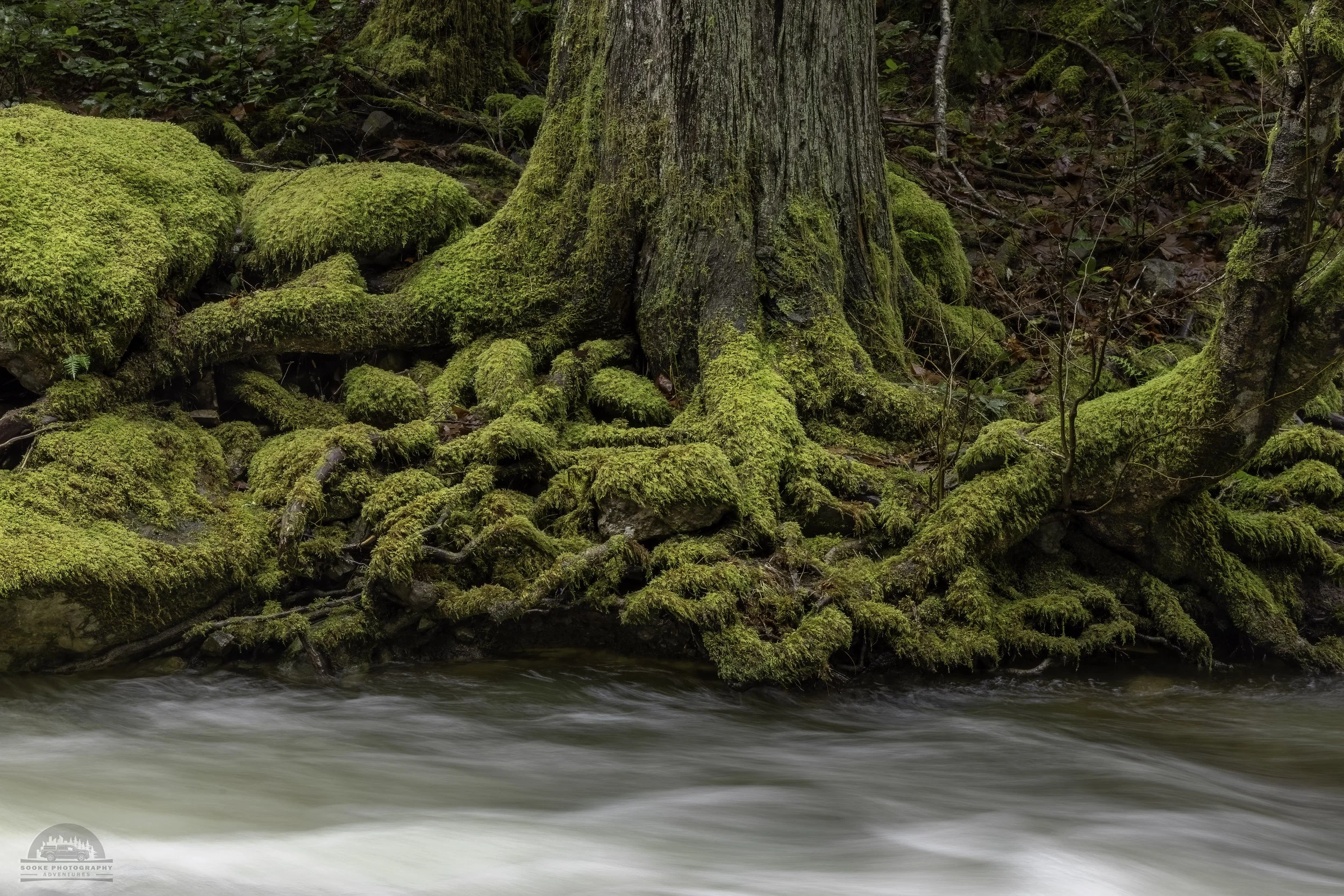
Rain can also obscure distant landscapes, creating subtle layers and depth within a photo. These conditions are a great opportunity to focus on more intimate scenes close to you—like moss-covered tree roots reaching toward a stream, as if they’re trying to drink it up.
If you’re still hesitant to take your expensive camera gear out in the rain, don’t despair. There are plenty of simple ways to keep your equipment dry and safe. Many higher-end cameras and lenses offer good weather sealing, but it’s still wise not to rely on that alone during heavy rain.
Dedicated rain covers for cameras and lenses are relatively inexpensive and pack down small, but a shower cap or plastic bag can work in a pinch. These will keep most of your gear dry, leaving only the front element or filter exposed. A lens hood helps keep rain off the glass, while microfiber cloths are perfect for wiping away moisture. A small towel provides extra insurance.
If possible, use natural cover like trees or rock overhangs to shelter your gear, especially when accessing your camera bag. When you’re finished shooting, let your equipment dry slowly and completely before storing it. Leaving battery and memory card compartments open helps prevent condensation caused by temperature changes. Don’t forget to dry off your tripod and any other gear you used.
Rain doesn’t have to end a shoot—it can be the very thing that makes it memorable. Some of your most rewarding landscape photographs may come from the days you almost stayed home.
Bad weather makes for good photography - Ansel Adams